What a random number generator actually does
A slot doesn't spin reels; it asks a piece of software for a number. The random number generator produces values continuously — thousands per second — and the value held at the instant you press the button maps to an outcome, which the animation then dramatises. Certified casino games use pseudo-random number generators: deterministic algorithms seeded in ways that make the output stream pass every statistical test for randomness. "Pseudo" describes the mathematics, not the fairness; the point of certification is proving that no player, and no operator, can predict or steer the next value.
Two practical consequences follow. Outcomes are decided the moment you commit the stake, so nothing you do during the animation matters. And each result is independent — a slot that just paid a big win is exactly as likely to pay again next spin as it was before. Most of the myths our industry attracts dissolve against that one fact.
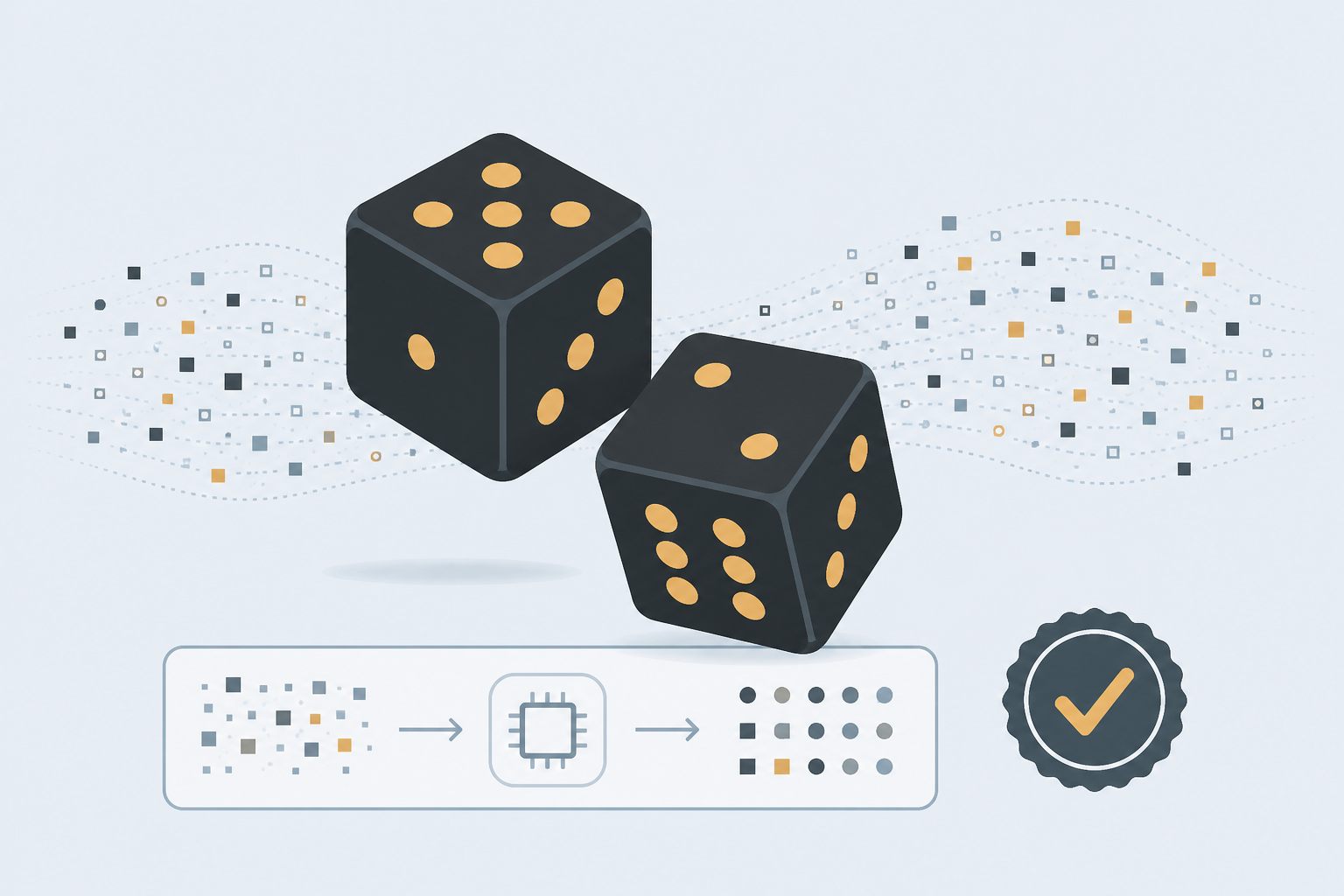
The testing labs
The Gambling Commission doesn't test games itself. It requires games offered to British customers to comply with its Remote Gambling and Software Technical Standards, and compliance is demonstrated through approved independent test houses. The names you'll meet most often:
- eCOGRA — a London-founded testing and certification agency established in 2003, known for its "Safe and Fair" seal and for operating an alternative dispute resolution service that UK players can use free of charge.
- GLI (Gaming Laboratories International) — an American lab operating since 1989, whose testing standards are referenced by regulators worldwide, covering RNGs, game maths and platform security.
- iTech Labs — a Melbourne-based laboratory whose RNG certificates appear in the footers of a large share of European-facing casinos, with published summaries of what each certificate covered.
- BMM Testlabs — one of the longest-running gaming test houses, working across both land-based machines and online platforms.
Certification isn't a one-off stamp. Labs test the RNG algorithm and its implementation, verify that live game returns match the declared design over large samples, and re-test when games or platforms change. Operators and studios pay for this testing, but the labs' accreditation depends on regulators continuing to trust their results — an incentive structure similar to financial auditing.
RTP: the honest number everyone misreads
Return to player is the share of total stakes a game pays back over its full statistical life — 96% RTP means an expected cost of £4 per £100 staked... eventually, across millions of rounds pooled over every player. Hold that "eventually" firmly: over an evening, variance swamps RTP completely, which is why the figure is useful for comparing games and useless for predicting a session. Studios publish RTP in each game's info panel, and the certified figure is what the labs verify. A game's volatility — whether it pays small and often or rarely and large — shapes a session far more than a percentage point of RTP.
Live dealers: randomness without algorithms
Live casino swaps computation for physics. Cards from shuffled shoes, a ball on a physical roulette wheel — randomness comes from the equipment, while optical recognition converts each physical outcome into data the platform can settle bets against. Testing here focuses on equipment integrity and studio procedures rather than algorithms: standards for card handling, shuffle frequency and wheel maintenance, all inherited from centuries of land-casino practice and inspected in the same spirit.
Reading a footer seal in practice
A genuine seal is a link. Click it: it should resolve to a certificate page on the lab's own domain, naming the operator or platform and stating what was tested and when. A static image that links nowhere proves nothing, and a licence claim is checked on the Commission's register rather than in the footer. Between the register and one working lab certificate, you've verified more than most players ever do — and it takes about two minutes. The five operators on our homepage list all pass both checks.
None of this makes games beatable. Certification guarantees the advertised behaviour of a game whose maths favour the house — it protects you from crooked software, not from the house edge. For what that distinction means for your bankroll, our responsible gambling page is the honest next read.